

Austin Maids

A cleaner home
starts with better habits

Practical cleaning guides for Austin households. Tips that work on real messes, from everyday routines to seasonal overhauls.

Bright, clean Austin kitchen with natural light

The Austin Home Cleaning Routine That Actually Sticks

Most cleaning routines fail because they're designed for perfect weeks. This one is built for the ones that aren't.

Bright Austin kitchen with morning light, clean counters and plants on the windowsill

A cleaning routine that only works when you have three free hours on Saturday isn’t really a routine. It’s a periodic emergency. What actually keeps a home clean is a system built around small, consistent actions rather than big occasional efforts. The difference between a house that’s always in decent shape and one that cycles between clean and overwhelming is almost always the structure, not the effort.

Here’s what works for Austin homes specifically, accounting for the fact that dust, cedar pollen, and limestone deposits are part of the deal.

Build around daily non-negotiables, not a schedule

The most effective cleaning routines are anchored to things you already do, not slots on a calendar. Wiping down the kitchen counters every night after dinner takes 90 seconds. Doing a quick sink rinse after brushing your teeth takes 30. These actions don’t require motivation because they’re attached to existing habits.

Pick three things that happen every day without exception: dishes handled before bed, bathroom sink wiped after morning use, one load of laundry moved through the cycle. These three alone eliminate the most common sources of overwhelm, because they keep clutter and grime from accumulating to the point where a cleaning session feels necessary.

Address Austin’s specific challenges weekly

Cedar pollen season, which runs roughly November through February in Austin, changes the cleaning calculus significantly. Pollen accumulates on horizontal surfaces faster than almost anywhere else in the country. During cedar season, weekly surface dusting isn’t optional. If you have cedar allergies, you need a HEPA vacuum and a microfiber dusting routine that traps particles rather than redistributing them.

Austin’s hard water is the other constant. Limestone deposits form quickly on shower glass, faucets, and any surface that gets regularly wet. A weekly spray of diluted white vinegar (roughly a 1:1 ratio with water) on shower walls, left on for five minutes before rinsing, prevents the buildup that requires real elbow grease to remove later. Once limestone deposits have formed and hardened, vinegar alone won’t cut it; you need a product with citric acid or a descaling agent.

Divide deeper tasks by zone, not by day

Deep cleaning tasks like cleaning inside the oven, descaling the dishwasher, washing windows, and scrubbing grout don’t need to happen on a schedule. They need to happen when they’re needed, which is easier to see if you do a monthly five-minute walk-through of each room and note what actually looks like it needs attention.

Zone-based thinking works better than room-based thinking for this. Kitchens have a cooking zone (stovetop, backsplash, hood filter), a prep zone (counters, cutting boards), and a storage zone (cabinet fronts, inside drawers). Each zone has its own cleaning needs and its own frequency. Breaking it down this way prevents both over-cleaning areas that don’t need it and ignoring areas that do.

The tools that make it faster

Austin homes benefit from a few specific tools that generic cleaning lists don’t mention. A squeegee kept in the shower and used after every use eliminates most soap scum and water spotting before it forms. This costs about ten seconds per shower and dramatically reduces how often you need to deep clean the shower at all.

For hard-water deposits specifically, Bar Keepers Friend (the powder version) outperforms almost every other product at the price point. It works on porcelain, stainless steel, and tile grout without scratching. Keep a small container in both the bathroom and kitchen.

A quality microfiber mop with washable pads handles both wet and dry cleaning on Austin’s increasingly common polished concrete and hard floors without leaving the streaks that disposable Swiffer pads tend to produce, especially in strong natural light.

When to call it

Some things genuinely aren’t worth DIY-ing. Oven interiors that haven’t been cleaned in more than a year, grout that has mildewed past a certain point, and air ducts that haven’t been cleaned since the last major renovation are all areas where professional cleaning gets better results faster than DIY approaches, and in some cases prevents damage that comes from using the wrong products or tools.


The goal isn’t a spotless house at all times. It’s a house that never gets so far out of hand that the catch-up feels like punishment. The daily anchors and weekly routines above are enough to hold that line in most Austin homes. Everything beyond that is optional, and the decision about what’s worth doing versus hiring out should be based on your actual time and actual priorities.
Read full article →

Eco-Friendly Cleaning Products That Actually Work (and the Ones That Don't)

The green cleaning aisle has gotten better. But some products marketed as eco-friendly still underperform where it counts. Here's the honest breakdown.

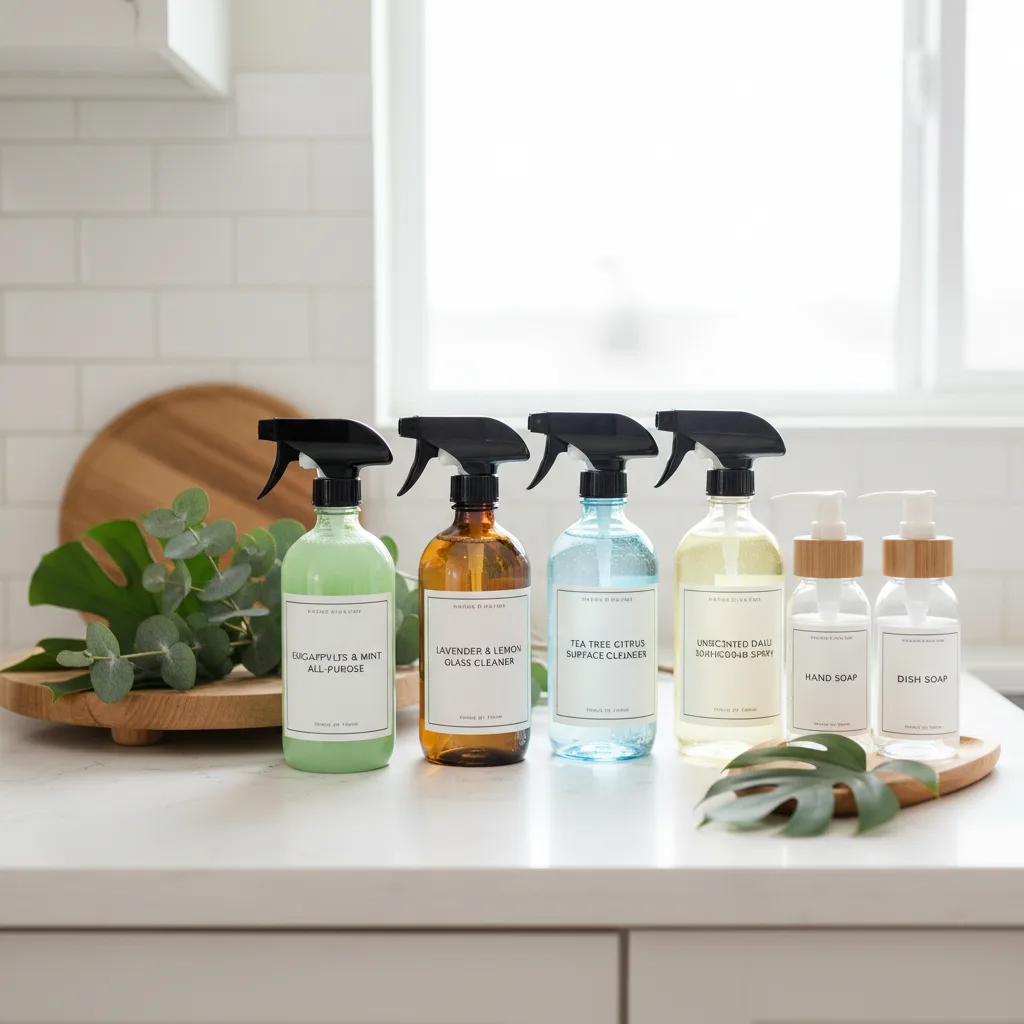
Arrangement of plant-based cleaning sprays and glass bottles on a white kitchen counter

The gap between green cleaning products that work and those that don’t has narrowed considerably in the past five years. Formulations have improved, third-party certifications have gotten more rigorous, and a few brands have genuinely figured out how to deliver cleaning performance without the ingredients that raise health or environmental concerns. But the category still has its share of products that lean on good marketing rather than good results.

The most useful frame for evaluating these products is the same one you’d apply to anything: does it actually do the job, at what cost, and how does it compare to the conventional alternative?

Where plant-based products have caught up

Dish soap is one area where plant-based formulas are genuinely competitive with conventional options. Brands like Branch Basics, Meliora, and Seventh Generation Free & Clear clean effectively, rinse cleanly, and don’t leave film on glasses. The performance gap between these and conventional dish soap is negligible for most uses, and the ingredient profiles are meaningfully better if you care about what goes down the drain or touches your hands repeatedly.

All-purpose sprays have also improved. The EWG (Environmental Working Group) database rates cleaning products on a transparent A-through-F scale based on ingredient safety and disclosure. Products from Attitude, Puracy, and Grove Collaborative’s Seedling line rate well and perform well on everyday kitchen and bathroom surfaces. They handle grease adequately for routine cleaning, though not for degreasing a hood filter that hasn’t been touched in six months.

Laundry detergent has arguably seen the biggest improvement. Powdered formulas in particular are more environmentally efficient (no water weight in shipping, no plastic bottle) and some of the best-performing are also among the greenest. Molly’s Suds and Tru Earth strips are two options that perform well in both hot and cold water and score well on third-party safety assessments.

Where the performance gap still exists

Disinfection is the category where plant-based products are weakest, and it’s worth being clear about why. Most EPA-registered disinfectants rely on active ingredients like quaternary ammonium compounds, hydrogen peroxide at higher concentrations, or alcohol above 70%. Many products labeled “natural” or “plant-based” don’t contain these ingredients at effective concentrations, which means they clean (removing visible dirt) but don’t disinfect (killing pathogens to a clinically relevant standard).

This matters in specific contexts: cutting boards that have had raw meat on them, bathroom surfaces in homes with immunocompromised people, and anywhere you actually need to eliminate pathogens rather than just remove mess. In those situations, a conventional disinfectant or a certified hydrogen peroxide-based product (Seventh Generation’s Disinfecting Spray is EPA-registered) is the right tool. Using an ineffective product because it’s labeled “natural” creates a false sense of safety.

Mold and mildew are another area where plant-based products consistently underperform. Austin’s humidity makes this a real issue, especially in bathrooms without strong ventilation. Enzyme-based cleaners work on mold stains but don’t penetrate tile grout effectively. For active mold on porous surfaces, a hydrogen peroxide-based product or, in persistent cases, a properly diluted bleach solution gets the job done when plant-based options don’t.

The ingredients worth avoiding

Several conventional cleaning ingredients have legitimate reasons to avoid them, independent of environmental concerns. Sodium lauryl sulfate (SLS) irritates skin with repeated exposure and is unnecessary in most cleaning products. Synthetic fragrances cover a broad category of undisclosed chemicals, some of which are allergens. 1,4-dioxane, a likely carcinogen, can appear as a byproduct of ethoxylation in products that don’t disclose it on the label.

The EWG Healthy Living app lets you scan products and see both disclosed ingredients and likely contaminants based on formulation. For products you use daily or in confined spaces, it’s worth checking rather than assuming a “natural” label means a clean ingredient list.

The honest calculus

For everyday cleaning, plant-based products in the categories above (dish soap, all-purpose spray, laundry) are worth switching to because the performance is equivalent and the ingredient trade-offs are real. For disinfection, mold treatment, and heavy-duty degreasing, conventional products are more reliable and the exposure is typically low enough that ingredient concerns don’t outweigh effectiveness.


Austin has a strong market for green cleaning products, and most of the major retailers carry a decent selection. The Austin Natural Grocery and Wheatsville Co-op both carry bulk cleaning concentrates that reduce plastic waste further. But the honest answer is that the best eco-friendly routine is one you’ll actually maintain, which means it has to work. Don’t sacrifice performance for the label.

Read full article →

Why Organization Has to Come Before Cleaning (and How to Do It Fast)

Cleaning a disorganized space just moves the mess around. This is the order of operations that actually works.

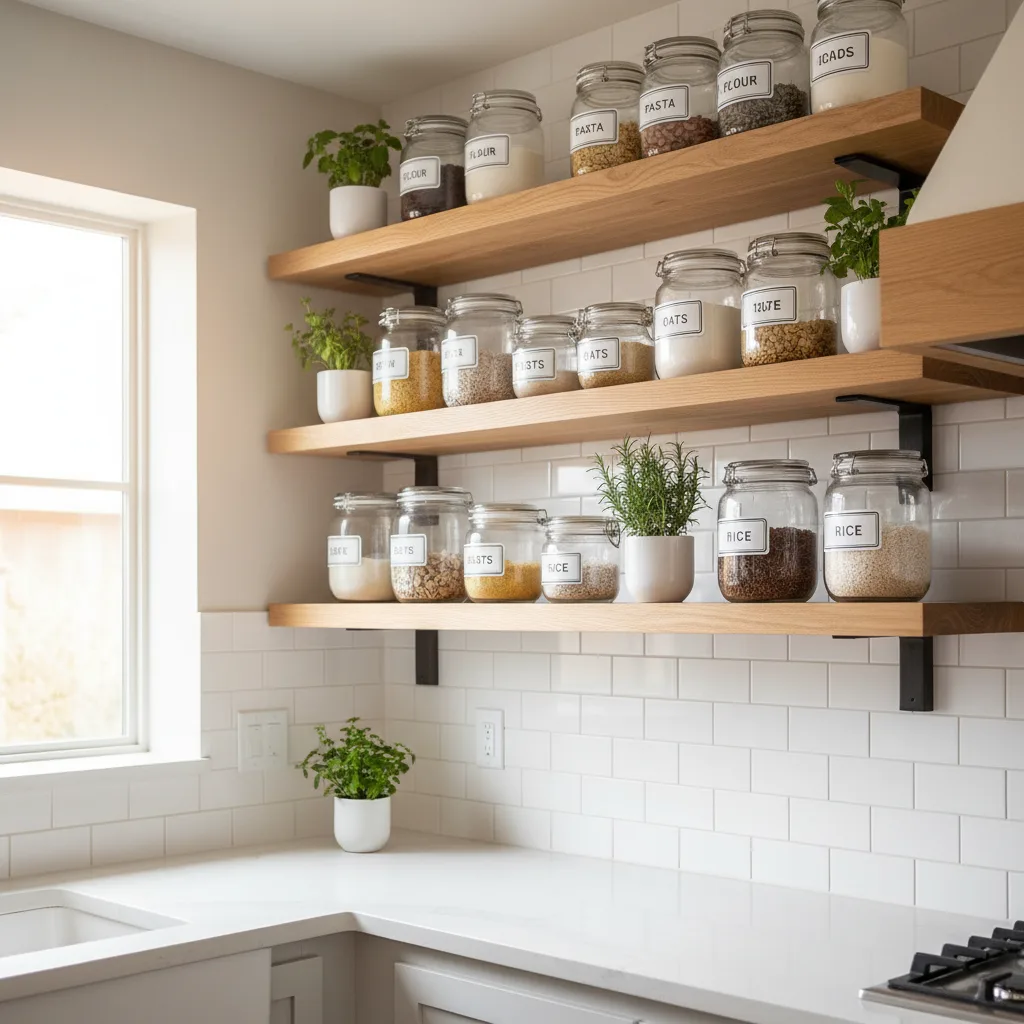
Neatly organized open shelving in a home kitchen with labeled containers and herbs

There’s a specific frustration that comes from cleaning for two hours and having the house look approximately the same as when you started. It’s almost always caused by the same thing: cleaning without organizing first. Surfaces that have no defined home for the items on them can’t really be cleaned, because putting things away requires a decision about where they go, and that decision is the hard part.

The fix isn’t a major organizational overhaul. It’s understanding the right sequence and applying a few specific strategies that work in real homes, not just in magazine spreads.

Clutter and dirt are different problems

The most useful reframe is that clutter and dirt require completely different approaches. Dirt is physical: it needs to be removed with products and tools. Clutter is organizational: it requires decisions about what stays, where it lives, and how it gets returned there. Cleaning tools don’t solve clutter. Cleaning a countertop covered in random items means moving those items, cleaning under them, and then putting them back exactly where they were. Nothing changes.

Organizing before cleaning means that when you wipe down a counter, you’re actually cleaning it, not rearranging the mess. This is why a thirty-minute organizing session before cleaning typically cuts actual cleaning time by forty percent or more. You’re not cleaning around things; you’re cleaning.

The two-pass organization method

For a quick pre-cleaning pass, work in two rounds. The first round is purely physical: walk through each room with a basket or box and collect everything that doesn’t belong there. Don’t make decisions about individual items. Just clear the surfaces and floor of out-of-place items into the container. This takes five to ten minutes per room and immediately transforms how the space looks and feels.

The second round is distribution: take the container from room to room, putting items back in the spaces where they actually belong. If something doesn’t have a clear home, it goes into a single “decisions” pile that you deal with after cleaning, not during. Items in the decisions pile are either given a permanent home, donated, or discarded. The pile doesn’t get put back where it was.

The two-pass method works because it separates collection from decisions. Making organizational decisions in the middle of cleaning is exhausting and slow. Separating them makes both tasks faster.

Where Austin homes specifically accumulate

Austin homes have a few consistent accumulation points that are worth addressing structurally rather than repeatedly. Entryways collect shoes, bags, and outdoor gear at a high rate, especially in homes near hiking trails or parks. A bench with under-seat storage and hooks at a useful height solves most of this. The problem is almost never that people don’t put things away; it’s that there’s nowhere obvious to put them.

Kitchen counters in Austin homes often collect mail and paperwork near the entry point from the garage or back door. A wall-mounted file organizer with three slots (action, pending, file) near that entry point removes most of this clutter permanently, because the action of dropping paper somewhere gets redirected to a place that actually works.

Closets in older Austin homes, particularly in Bouldin, Travis Heights, and Hyde Park neighborhoods, are often undersized for modern wardrobes. Adding a second hanging rod below shorter clothing and using uniform slim velvet hangers (which reduce stack depth significantly compared to standard plastic hangers) can double usable closet space without renovation.

The maintenance question

Organization only holds if putting things away is easy enough to do automatically. The test is whether you can return any given item to its home in under ten seconds. If it takes longer, the system won’t sustain itself, because the small friction accumulates over days until everything is out of place again.

This is why the best organizational systems are simple and obvious rather than elaborate and clever. A drawer with a few categories of items beats a perfectly labeled system that requires thought to use. People revert to the path of least resistance, so the goal is to make the organized state the easiest option.


The relationship between organization and cleanliness is cyclical: organized spaces are easier to clean, and clean spaces are easier to keep organized. Getting the first part right makes everything downstream easier. It’s worth doing the organizational groundwork before picking up a mop.

Read full article →