Why Organization Has to Come Before Cleaning (and How to Do It Fast)
Cleaning a disorganized space just moves the mess around. This is the order of operations that actually works.
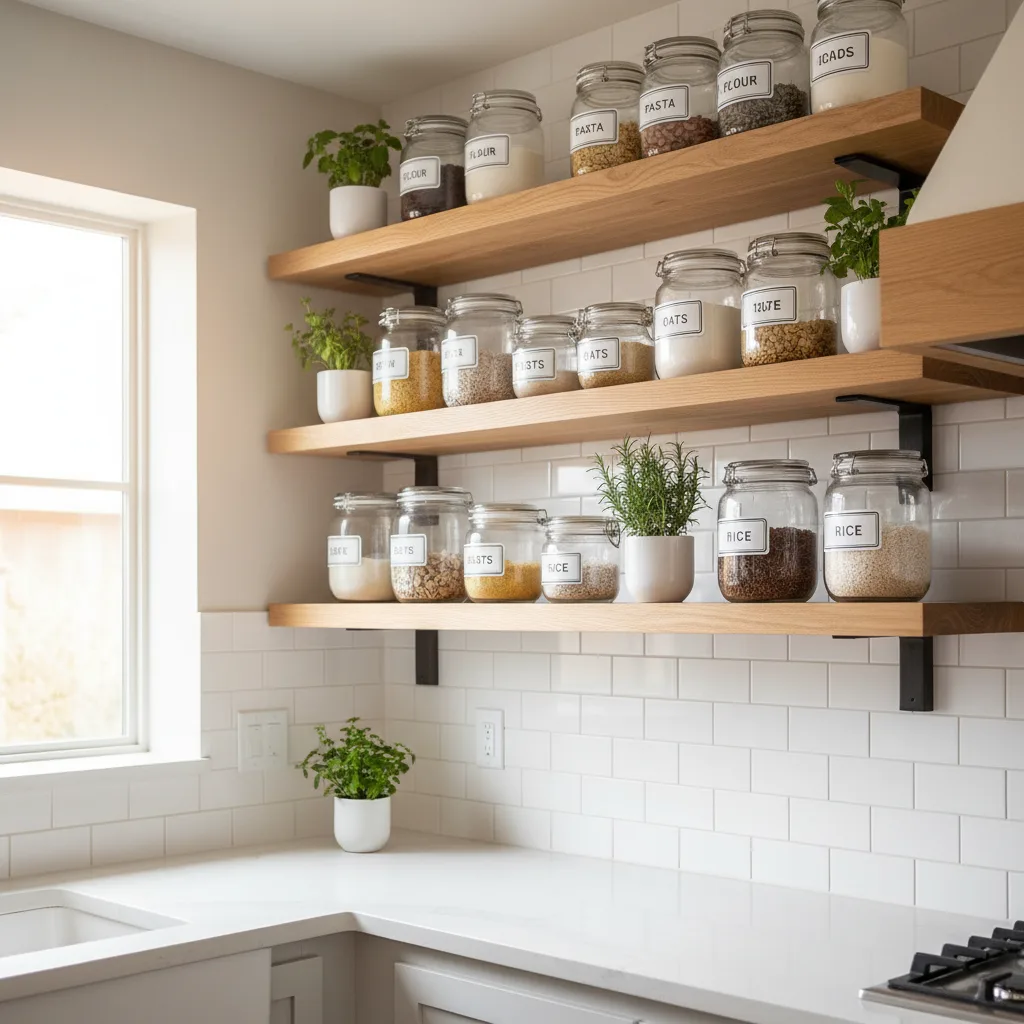
There’s a specific frustration that comes from cleaning for two hours and having the house look approximately the same as when you started. It’s almost always caused by the same thing: cleaning without organizing first. Surfaces that have no defined home for the items on them can’t really be cleaned, because putting things away requires a decision about where they go, and that decision is the hard part.
The fix isn’t a major organizational overhaul. It’s understanding the right sequence and applying a few specific strategies that work in real homes, not just in magazine spreads.
Clutter and dirt are different problems
The most useful reframe is that clutter and dirt require completely different approaches. Dirt is physical: it needs to be removed with products and tools. Clutter is organizational: it requires decisions about what stays, where it lives, and how it gets returned there. Cleaning tools don’t solve clutter. Cleaning a countertop covered in random items means moving those items, cleaning under them, and then putting them back exactly where they were. Nothing changes.
Organizing before cleaning means that when you wipe down a counter, you’re actually cleaning it, not rearranging the mess. This is why a thirty-minute organizing session before cleaning typically cuts actual cleaning time by forty percent or more. You’re not cleaning around things; you’re cleaning.
The two-pass organization method
For a quick pre-cleaning pass, work in two rounds. The first round is purely physical: walk through each room with a basket or box and collect everything that doesn’t belong there. Don’t make decisions about individual items. Just clear the surfaces and floor of out-of-place items into the container. This takes five to ten minutes per room and immediately transforms how the space looks and feels.
The second round is distribution: take the container from room to room, putting items back in the spaces where they actually belong. If something doesn’t have a clear home, it goes into a single “decisions” pile that you deal with after cleaning, not during. Items in the decisions pile are either given a permanent home, donated, or discarded. The pile doesn’t get put back where it was.
The two-pass method works because it separates collection from decisions. Making organizational decisions in the middle of cleaning is exhausting and slow. Separating them makes both tasks faster.
Where Austin homes specifically accumulate
Austin homes have a few consistent accumulation points that are worth addressing structurally rather than repeatedly. Entryways collect shoes, bags, and outdoor gear at a high rate, especially in homes near hiking trails or parks. A bench with under-seat storage and hooks at a useful height solves most of this. The problem is almost never that people don’t put things away; it’s that there’s nowhere obvious to put them.
Kitchen counters in Austin homes often collect mail and paperwork near the entry point from the garage or back door. A wall-mounted file organizer with three slots (action, pending, file) near that entry point removes most of this clutter permanently, because the action of dropping paper somewhere gets redirected to a place that actually works.
Closets in older Austin homes, particularly in Bouldin, Travis Heights, and Hyde Park neighborhoods, are often undersized for modern wardrobes. Adding a second hanging rod below shorter clothing and using uniform slim velvet hangers (which reduce stack depth significantly compared to standard plastic hangers) can double usable closet space without renovation.
The maintenance question
Organization only holds if putting things away is easy enough to do automatically. The test is whether you can return any given item to its home in under ten seconds. If it takes longer, the system won’t sustain itself, because the small friction accumulates over days until everything is out of place again.
This is why the best organizational systems are simple and obvious rather than elaborate and clever. A drawer with a few categories of items beats a perfectly labeled system that requires thought to use. People revert to the path of least resistance, so the goal is to make the organized state the easiest option.
The relationship between organization and cleanliness is cyclical: organized spaces are easier to clean, and clean spaces are easier to keep organized. Getting the first part right makes everything downstream easier. It’s worth doing the organizational groundwork before picking up a mop.